
Manual Therapy
What Is Manual Therapy?
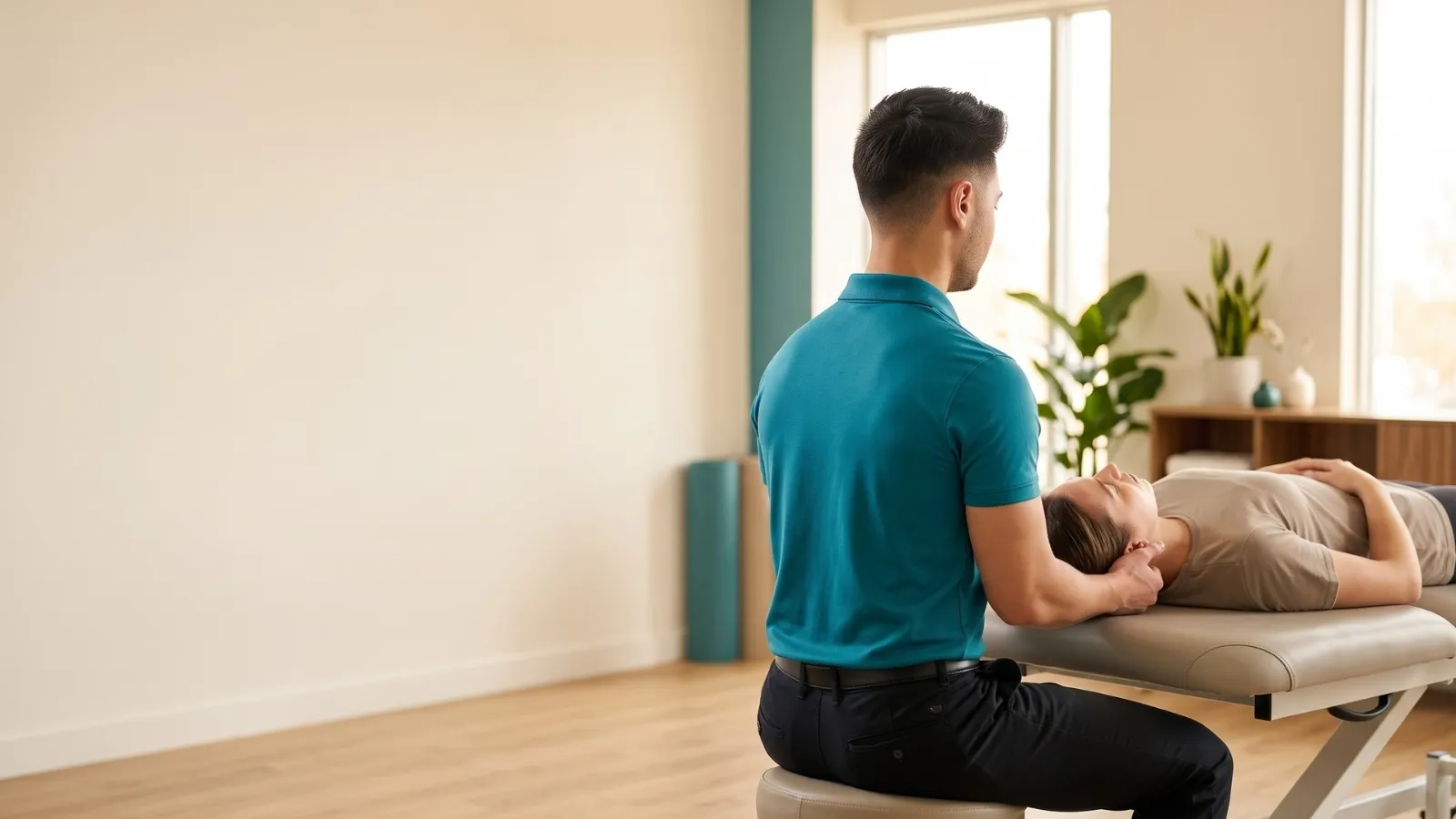
Manual therapy is the general name for assessment and treatment techniques that a physiotherapist applies with their hands to the musculoskeletal system. It is used to address joint mobility, soft tissue flexibility and pain-related movement restrictions.
Treatment may include joint mobilisation, soft tissue techniques and movement-oriented guidance.
When Is Manual Therapy Used?
Manual therapy may be applied, after a clinical assessment, in the following musculoskeletal conditions:
Neck and Back Pain
Joint Stiffness
Restricted Movement
Muscle Tension
Treatment is tailored to your findings, pain level and general health. Every condition is different; which techniques are suitable is determined through clinical assessment.
Part of a Holistic Programme
Manual therapy is not treated as a stand-alone method, but as part of an individually planned physiotherapy programme. Hands-on techniques are usually planned together with an exercise programme and posture and movement education; the aim is to maintain the range of movement gained in daily life.
Assessment and Process
The process begins with an assessment and proceeds with an individualised plan.
Clinical Assessment
The process begins with a detailed clinical assessment, covering your history, observation and movement analysis.
Individualised Plan
Following the assessment, an individualised plan is created.
Follow-Up and Updates
The process is updated as the findings change; where needed, it proceeds in coordination with the relevant physician.
Our Approach at Our Clinic
Details of our clinic's own approach to manual therapy will be shared in this section soon.
You can find the personal work of our team member Enis Çalışkan in the field of manual therapy at eniscaliskan.com .
Frequently Asked Questions
Is manual therapy painful?
Treatment is adjusted to your tolerance, and staying within a comfortable working range is a core principle. Anything that causes discomfort during assessment is taken into account.
Is manual therapy enough on its own?
Manual therapy is usually planned together with an exercise programme and movement education. Exercise plays an important role in maintaining the gains achieved through hands-on techniques.
How many sessions are needed?
The number and frequency of sessions vary from person to person and depend on the findings; they are planned after a clinical assessment and may be updated during the process.
When is it appropriate to seek an assessment?
If you have ongoing neck or back pain, restricted movement or joint stiffness, you are welcome to get in touch for an assessment.
For Assessment and Information
You are welcome to contact us to learn more about manual therapy or to arrange an assessment.